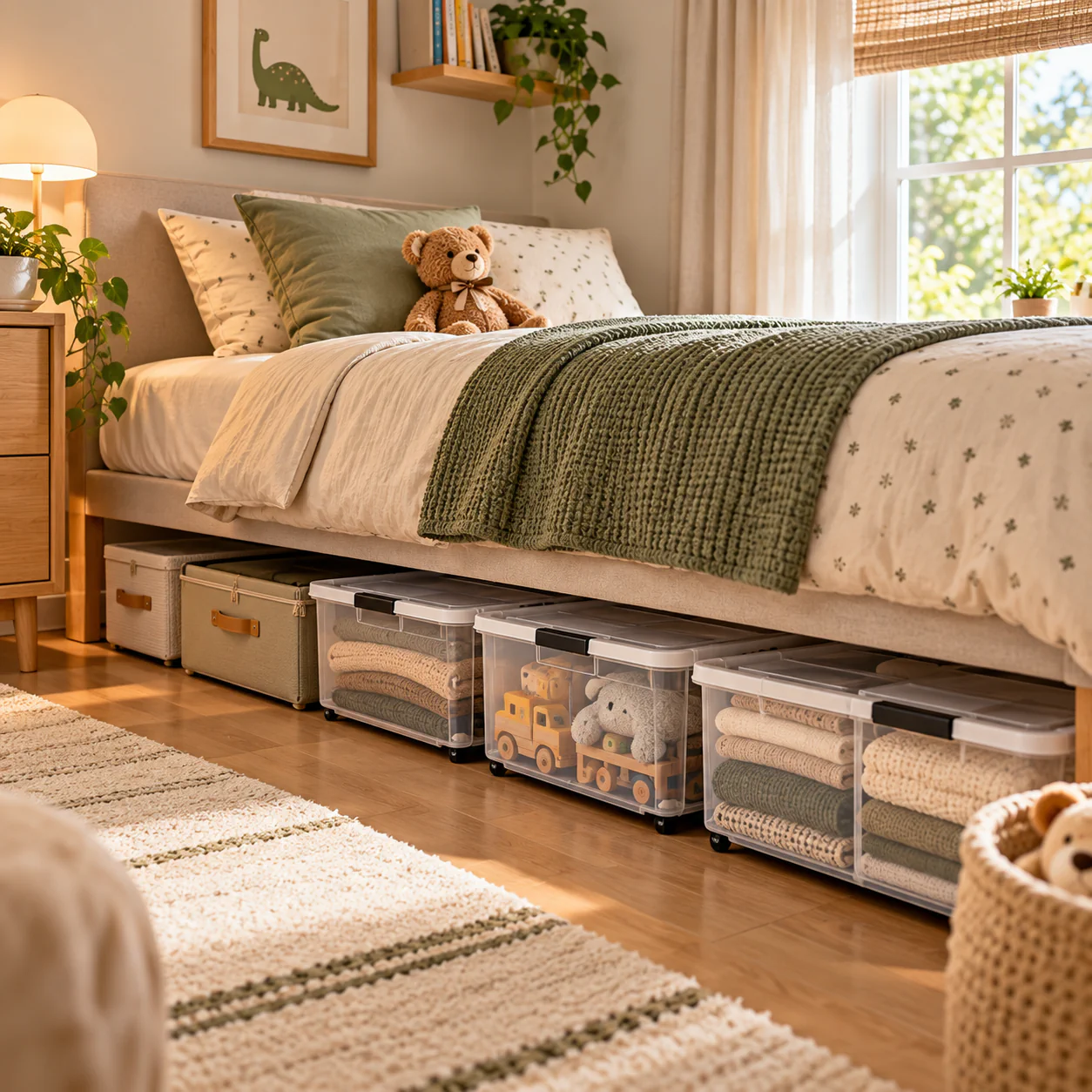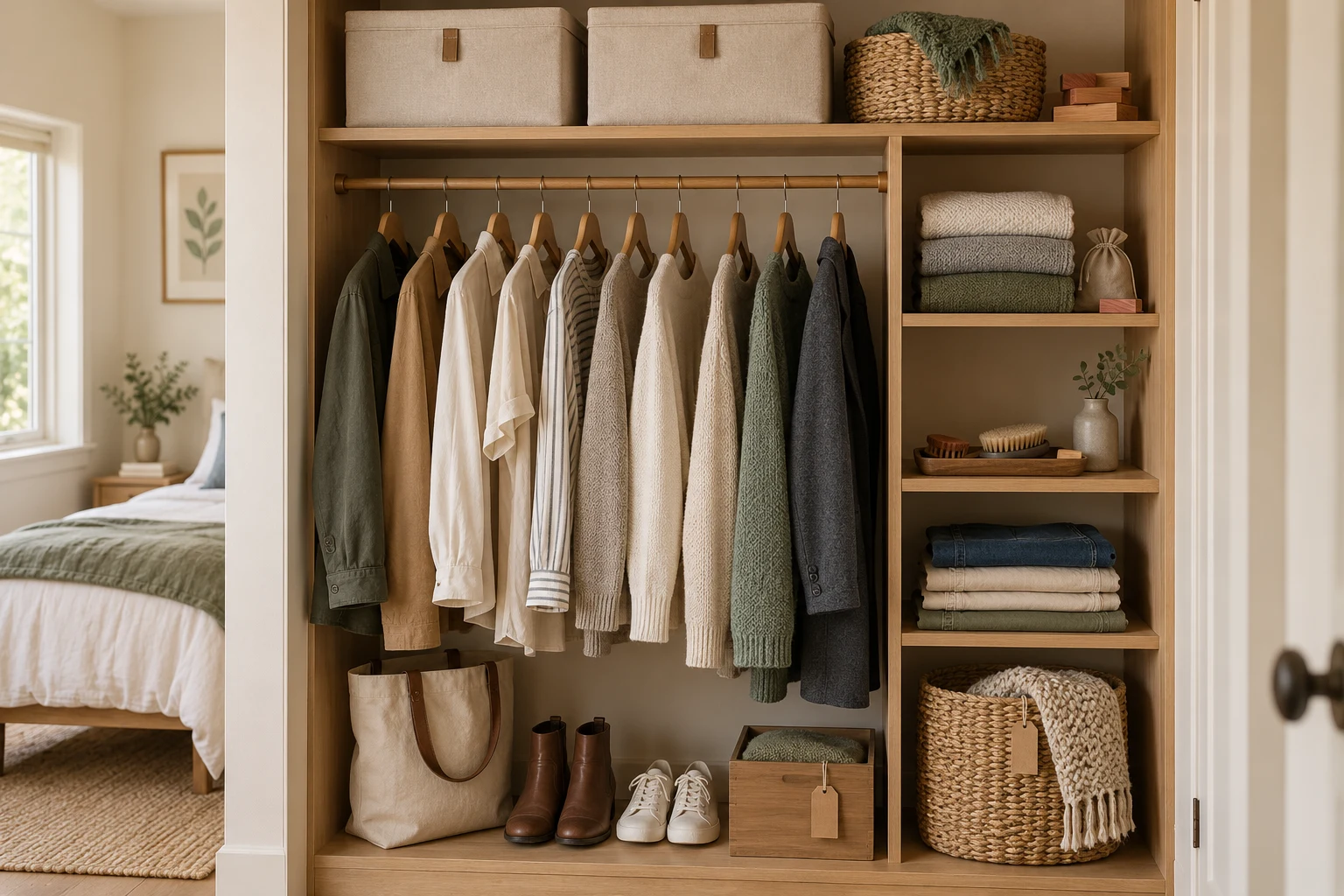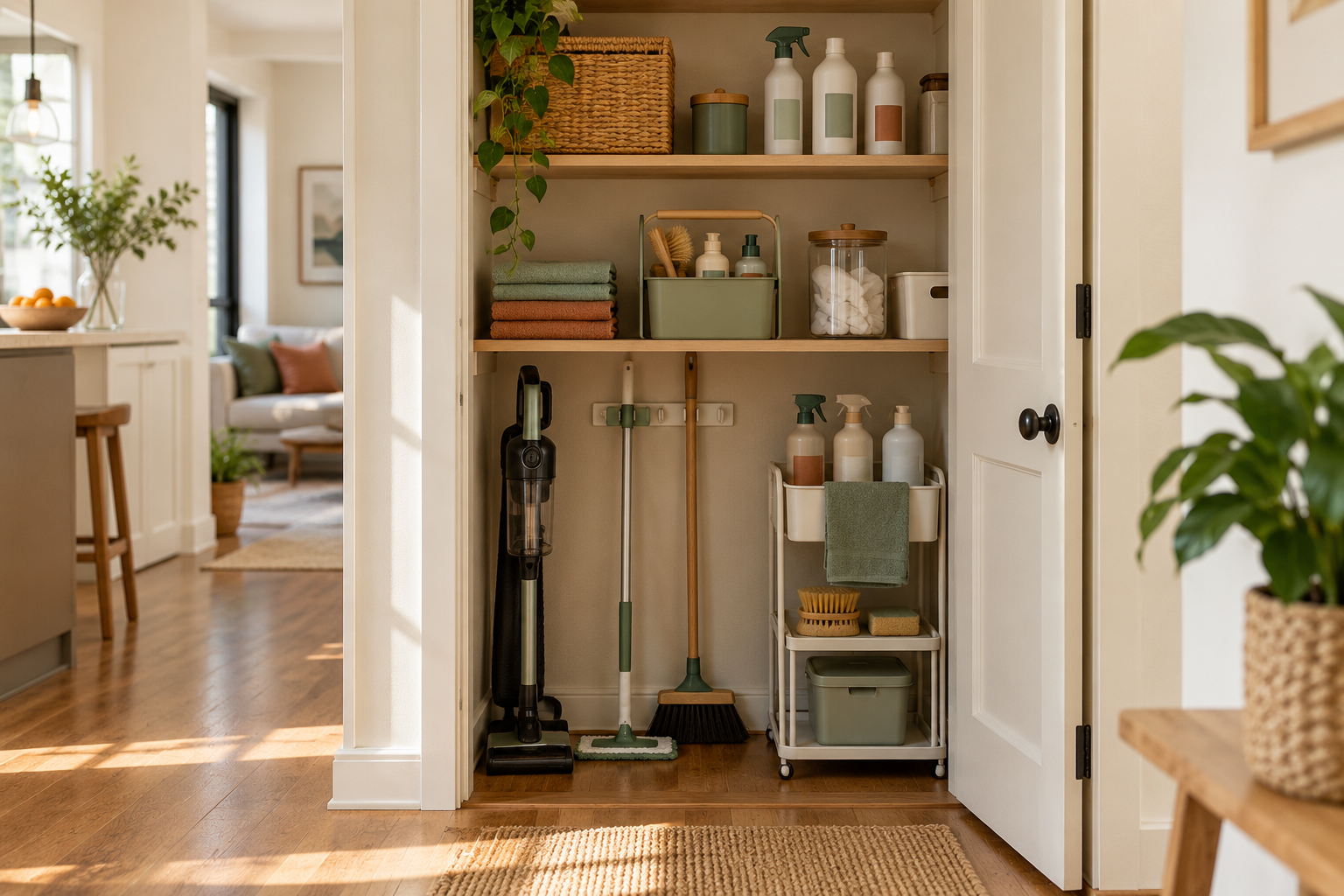
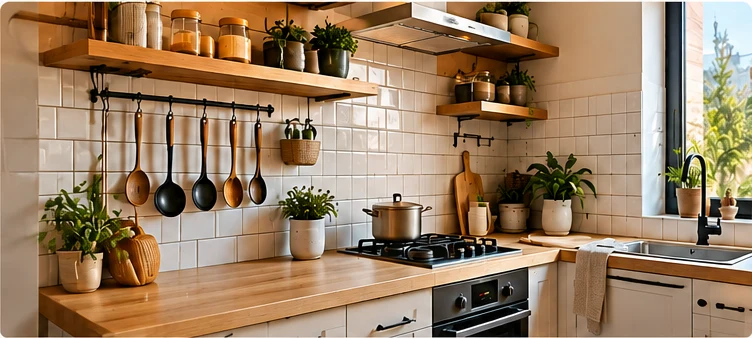
A useful pantry is not the one that holds the most containers. It is the one that lets you find breakfast, put away a grocery delivery, and notice what needs using without moving three other things first. In a small kitchen, that means designing the operating space around the food you actually buy, the people who use it, and the clearance needed to open, lift, and clean every shelf.
This guide treats the pantry as a household workflow. It does not prescribe a universal container set or promise a specific shelf life. Food labels, package instructions, room conditions, and the exact cabinet or shelf still control. For a broader one-wall or galley plan, see our small-kitchen layout guide.
Start with a pantry audit, not a shopping list
Before buying bins, record what enters the kitchen during a normal week. Group it into broad jobs such as breakfast, cooking staples, snacks, baking, drinks, and reserve stock. Photograph the current shelves, then note the objects that repeatedly land on the counter. Those are workflow problems, not automatically a reason to buy more storage.
Measure the usable width, depth, and height of each shelf. Then measure the opening arc of the pantry door, nearby drawers, and the main walking route. Include the hand space needed to remove a bin or lift a can. A shelf that fits on paper but blocks a drawer when loaded is not usable capacity.
AptNook Tip: Mark the proposed cabinet, cart, or shelf footprint with painter's tape for one day. Walk the route while carrying a plate, opening the refrigerator, and unloading groceries. Keep the smallest layout that survives those ordinary actions.
Build zones around frequency and handling
Use a small number of zones that match real decisions rather than a detailed filing system:
| Zone | Best contents | Placement test |
|---|---|---|
| Daily reach | breakfast items, tea, coffee, frequently used snacks | Can the person using it reach and return it without a step stool? |
| Cooking core | grains, pasta, canned ingredients, oils that belong in the pantry | Can you lift the largest package without hitting the shelf above? |
| Baking or project zone | flour, sugar, spices, occasional tools | Can the whole group come out together for a recipe? |
| Reserve | unopened duplicates and low-frequency stock | Can an adult inspect it without moving a heavy stack? |
| Refill point | shopping list, empty jars, date marker | Is it outside the splash and heat zones but easy to see? |
Put the most frequently used items between comfortable waist and shoulder reach when possible. Keep heavy cans, bottles, and bulk packages lower. High shelves are better for light, infrequently used items, not for a box that must be lifted over your head.
Choose containers by the food, not the aesthetic
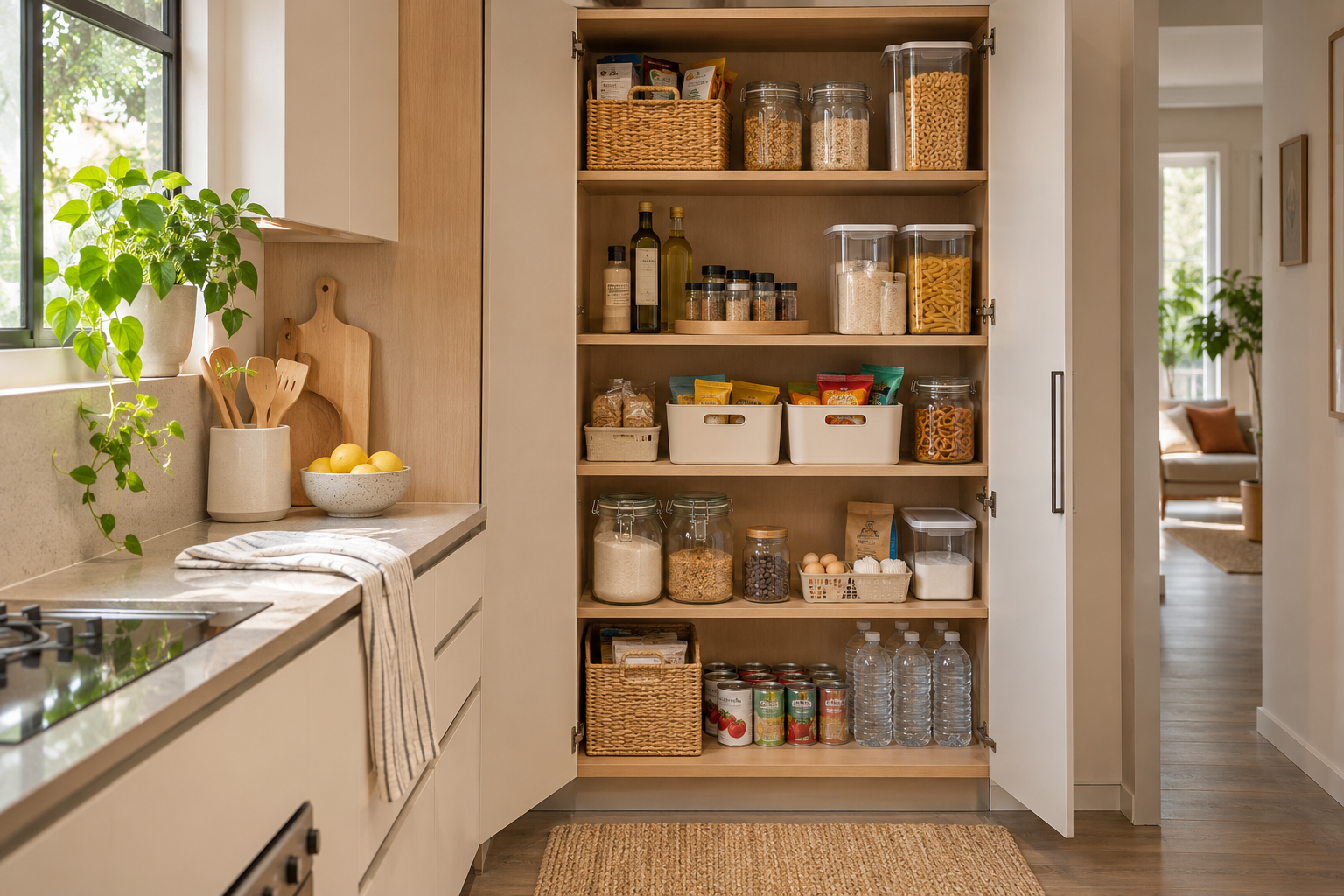
Uniform containers can make a pantry look calm, but they are not automatically more functional. Keep products in their original packaging when the label, allergen information, preparation directions, or date needs to remain visible. If you decant dry goods, retain the original label or record the product name and date on the new container.
Match the opening to the hand that uses it. A handled bin can help with small packets, while a shallow tray is better for bottles that need to stay upright. Avoid deep, opaque bins for items used every day: they turn the back row into forgotten stock. Leave enough headroom to remove a full container without scraping the shelf above.
Do not store food containers where leaks or crumbs can damage the cabinet. Keep cleaning chemicals and other household products away from food, and never transfer a chemical into a food container. Follow each product label and local disposal guidance.
Make rotation visible without inventing expiry rules
The FDA explains that many packaged-food date labels are quality indicators chosen by manufacturers; apart from infant formula, federal law generally does not require a quality-based date label on packaged foods. “Best if Used By” usually communicates expected quality, not an automatic safety cutoff. Inspect the package and follow the manufacturer when the food shows spoilage, damage, or a storage instruction that changes the decision. Use the FDA food-waste and date-label guidance and the USDA FoodKeeper tool for item-specific questions.
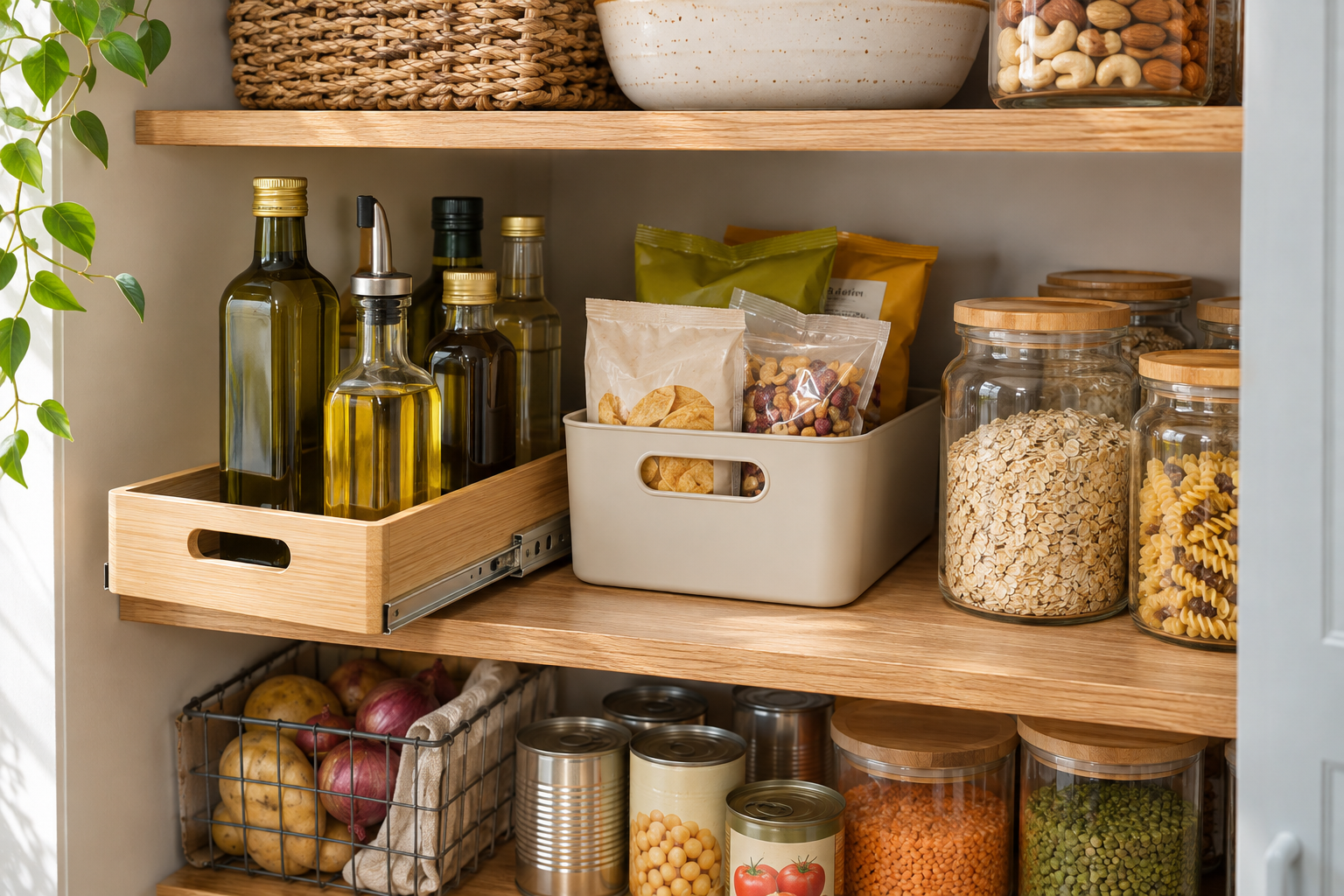
For the pantry itself, use a simple first-in, first-out routine:
- Move the older matching item to the front before putting a new one away.
- Keep duplicates together so the next shop is visible.
- Write the opening date on foods that leave their original package.
- Add a short “use next” list to the refill point.
- Check cans and jars for leaking, swelling, severe dents, rust, broken seals, or other damage; do not taste-test a questionable container.
USDA guidance says commercially canned and shelf-stable products should be kept in a cool, clean, dry place, not above a stove, under a sink, or in locations exposed to temperature extremes. A pantry beside a hot appliance or damp plumbing zone is therefore a poor reserve location even if the shelf looks convenient.
Protect the operating clearance
The pantry needs an open state as well as a closed state. Test the full door swing, drawer extension, bin pull, and the body position needed to read a label. Keep the main route clear of freestanding carts and do not use the pantry as a parking spot for appliances that must be moved every day.
If a shelf is tall, narrow, or freestanding, follow its installation instructions and use the supplied anti-tip method. The CPSC recommends anchoring furniture to the wall or floor, placing heavier items lower, and keeping attractive objects away from climbable tops. Wall material, fasteners, the loaded configuration, and rental permission all matter; do not improvise a fixing method from a generic plug.
For renters, start with reversible changes: a removable shelf insert, a shallow handled bin, labels, or a cart that can be parked without narrowing the route. Do not drill, alter ventilation, or modify a cabinet without the owner's permission and a suitable installation plan.
A 15-minute weekly reset
Choose one consistent reset moment, such as after the weekly shop. First wipe spills and crumbs using a product appropriate for the surface. Then return daily items to their zones, bring older duplicates forward, and write down only the category that needs replenishing. Finally, remove one container or divider that has not improved a real action.
The reset should not require decanting the whole pantry. If it does, the zones are too detailed, the bins are too deep, or the reserve is mixed with daily stock. Simplify the system before adding another organizer. Our vertical storage guide and hidden-storage guide cover the same visibility and access principles in other rooms.
Common small-pantry mistakes
- Measuring the shelf but not the door, drawer, or bin pull path.
- Buying a matching container set before checking the food categories.
- Putting heavy cans or glass bottles on a high shelf.
- Storing reserve stock above the stove, under the sink, or in a damp zone.
- Treating a “Best if Used By” date as a universal safety rule.
- Hiding the original food label after decanting.
- Anchoring a tall shelf without checking the wall, instructions, or rental permission.
- Filling every inch so there is no hand space for removal or cleaning.
Sources and limitations
This update was researched on November 2, 2026. Primary references include the FDA guidance on food waste and product dating, the USDA FoodKeeper resource, USDA guidance on canned-food storage, and the CPSC Anchor It safety alert. These sources support food-date, storage-condition, and furniture-stability guidance; they do not validate a particular cabinet's capacity or a universal pantry dimension. Verify the product manual, package label, wall conditions, and lease before making an installation decision.
The AptNook takeaway
The best small-kitchen pantry is a measured route through the food you already use. Protect opening clearance, keep daily categories visible, rotate by the package and the condition of the food, and reserve high or deep storage for light, infrequent items. When the system can be reset in minutes, the pantry has earned its footprint.

David
Head of Editorial — AptNook
David oversees AptNook's editorial workflow, coordinating research, writing, and quality reviews to help readers make informed decisions about space-saving furniture and small-room solutions.