The easiest entry-to-bedroom routine is a fixed sequence: secure the door, land departure essentials, contain wet or dirty items, route food and paper, sort clothes by their next use, and prepare for tomorrow before bed. This is a sequence, not an entryway makeover. Each stop resolves what you are carrying before it reaches the bed.
In a small apartment, complete each decision at the point where you naturally reach for or set down the item. A hook beside the door works better than a beautiful rack that requires a second trip.
The arrival-to-sleep chain
Use the same five handoffs on an ordinary evening:
- Door-close checkpoint: lock the door and land keys, wallet, badge, and daily bag.
- Outside-item checkpoint: contain shoes, outerwear, umbrellas, and anything damp or dirty.
- Immediate detours: put away groceries and route paper, packages, and returns.
- Clothing handoff: decide whether each garment is clean, wearable again, ready to wash, or needs special care.
- Bedroom close: prepare tomorrow's essentials, clear the bed-to-door route, and stop.
The five stops do not require five organizers. A tray, two permitted hooks, a shoe mat, one action inbox, and a hamper may be enough. The order matters more than the products.
1. Complete a 60-second door-close checkpoint
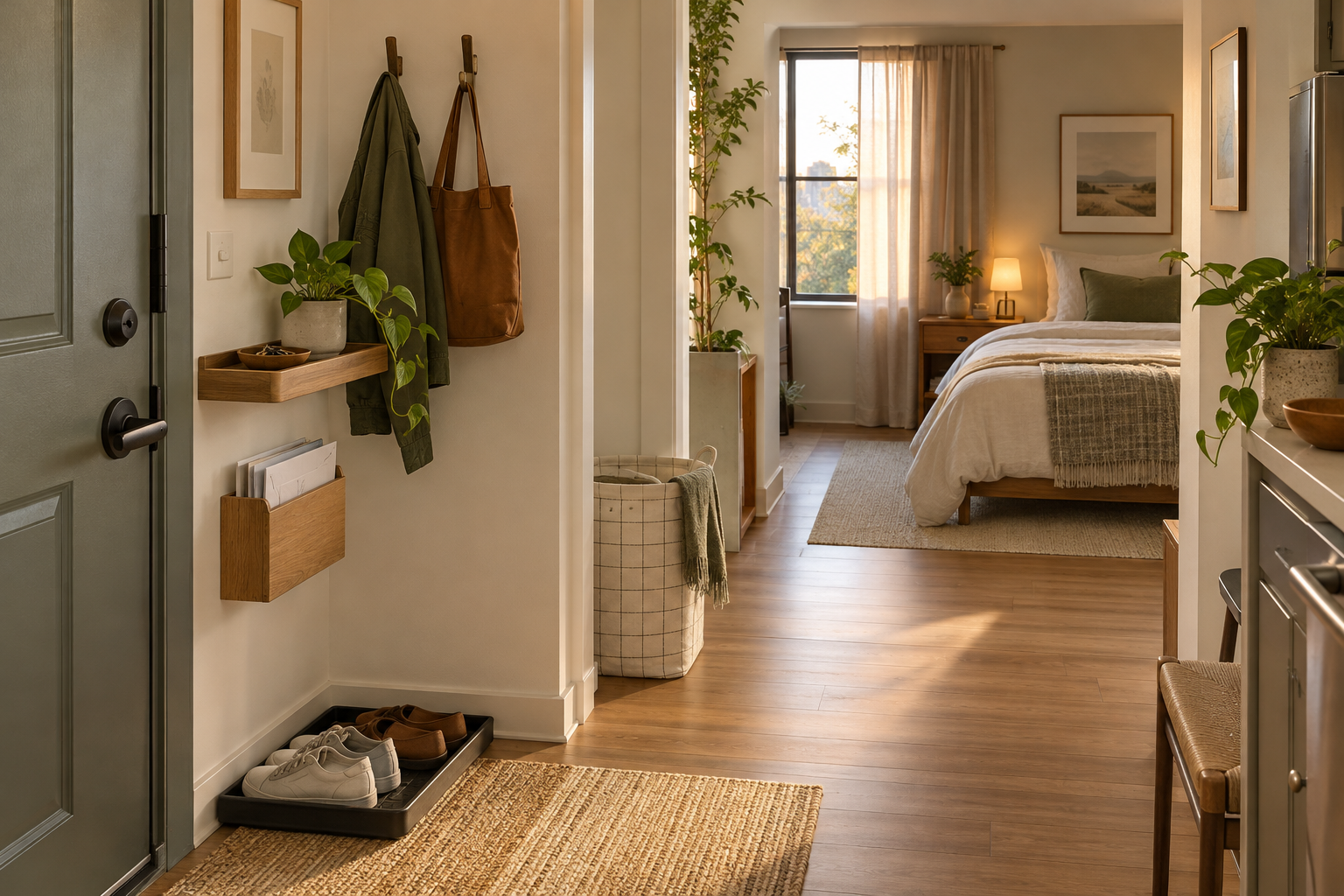
Finish the first decisions before crossing the apartment. Close and lock the door, then place keys and other departure essentials in one fixed launch spot. Put the daily bag on its hook or shelf rather than on the bed, sofa, or floor.
Next, separate dry items from wet or dirty ones:
- Shoes stop on a washable tray or mat.
- A dry coat goes on its active hook.
- A damp coat dries fully in a ventilated area before entering closed storage.
- An umbrella drains in a stable, water-resistant holder.
- Muddy, leaking, or damaged items move to an appropriate cleaning or treatment point.
Keep the setup proportional. One hook per active coat or daily bag is clearer than a crowded bank of hooks. Off-season outerwear belongs in secondary storage, not in the nightly arrival path.
If the front door opens directly into the living room, create a landing strip rather than pretending there is a hallway. A shallow tray, a small shoe zone, and one or two permitted hooks can define the checkpoint. AptNook's small-entryway layout guide covers the physical layout choices; this routine begins once those few destinations exist.
2. Take the kitchen and paper detours immediately
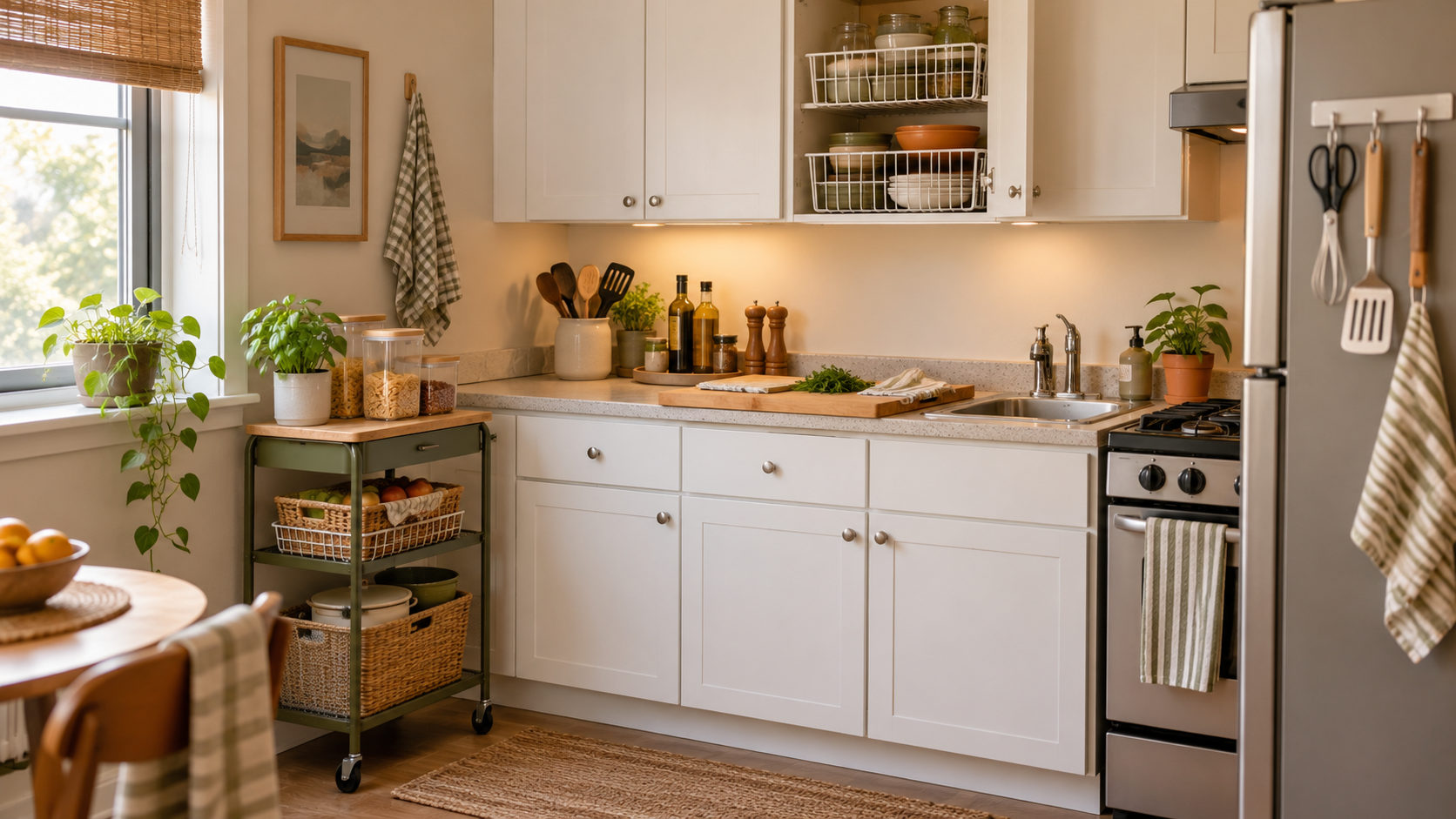
When you arrive with groceries and work gear together, food takes the first detour. Put away refrigerated and frozen groceries, then unpack the remaining food. Nest reusable bags and return them to the place from which they leave the apartment.
Give paper only two immediate outcomes:
- Recycle obvious waste in the appropriate location.
- Put anything requiring a decision, payment, reply, or filing into one action inbox.
Do not open a third option on the dining table or nightstand. The action inbox is temporary; review it at a scheduled time rather than letting it become permanent storage.
Packages follow the same rule. Recycle suitable packaging, return the item to its proper room, or put a return in one small outgoing basket. Pair a return with the daily bag only when it is genuinely leaving the next day. Otherwise, it becomes fresh clutter at the door.
Medicines, important documents, batteries, and valuables should go to their appropriate secure locations, not an open arrival tray. In a home with children or pets, treat access and safety as higher priorities than convenience.
3. Use a clothing-state handoff at the bedroom threshold
Bedroom-chair clutter often comes from an unresolved clothing decision. Decide by next use, not by where the garment happened to land.
| Clothing state | Destination | Completion rule |
|---|---|---|
| Clean | Closet or drawer | Put it away before starting another laundry load |
| Genuinely wearable again | One hook, rail section, or compact valet | Review when the limited space is full |
| Ready to wash | Ventilated hamper or laundry basket | Sort only into loads you actually wash separately |
| Damp, stained, or special care | Visible drying or treatment point | Follow the care label; do not bury it in the hamper |
| Leaving the home | Outgoing basket near the entry | Give it a real trip or deadline |
Place the hamper close to where clothes come off, provided it does not block a door, vent, heater, or walking route. If laundry happens outside the apartment, store the supplies needed for that trip together and keep the loaded basket manageable to carry.
The wearable-again category needs a firm boundary. When its hook or rail section is full, return clean pieces to the closet and send the rest to laundry as appropriate. This small limit is often easier to maintain than a chair that can accept an unlimited pile.
4. Apply a bedroom-threshold rule
Nothing from outside crosses the bedroom threshold unless it has a bedroom job. Coats, bags, unopened mail, delivery boxes, and shoes stop earlier. Sleep-related and next-morning items can continue.
Keep the bedside focused on what is actually used there: a suitable lamp, current reading, water if desired, and necessary personal items. Give jewelry or small accessories one shallow tray. The bed itself is not a sorting surface; once an arrival object reaches it, the routine has merely postponed the decision.
Use one stable charging location and follow the charger, device, and power-strip instructions. Position cables so they do not create a walking obstacle. If the safe outlet location does not support the setup, move the charging point rather than stretching a cable across the route.
5. Prepare departure without rebuilding clutter
Tomorrow's outfit belongs near the wardrobe or dressing point, not across the entry bench. Check the next day's schedule and weather, choose the outfit, and group only the essentials that must leave together.
Use the launch spot for departure essentials: keys, wallet, badge, transit card, and daily bag. An outgoing parcel, library book, or borrowed item joins that group only when the next trip can complete the errand. This rule prevents preparation from turning the entry into long-term storage.
For two residents, assign locations rather than vague responsibility. Each person can have one hook, one shoe section, and one small tray. Shared categories such as mail and returns still need a clear owner or review time.
Close the arrival loop before sleep
Run one short reset in the same direction each night so the sequence is easier to repeat:
- Resolve any food, packaging, or paper that arrived with you.
- Put loose clothing into its clean, wearable-again, laundry, or treatment destination.
- Return keys, wallet, badge, and bag to the launch spot.
- Prepare the next outfit and any item that is definitely leaving tomorrow.
- Check that the route from bed to bedroom door and onward to the main exit is clear.
Stop when the arrival loop is closed. This is not a whole-home cleaning routine and not the moment to reorganize a closet. Capture a larger task on a list and protect the short sequence.
The U.S. Fire Administration advises households to map doors and windows, identify ways out, and make sure doors and windows are not blocked. Shoes, packages, laundry, folded equipment, and new storage should never narrow the household's planned escape route.
Adjust the sequence for difficult arrivals
When you arrive overloaded
Put refrigerated and frozen groceries away first. Then return to the door-close checkpoint and finish the remaining handoffs in order. Do not carry every bag to the bedroom simply to free your hands.
During wet weather
Keep a washable tray and stable umbrella holder at the outside-item checkpoint. Separate damp items immediately and let them dry fully in a suitable ventilated area. Do not close moisture into a cabinet or mix wet garments into the general wear-again category.
When someone is already asleep
Prepare a quiet arrival version in advance: a low-noise key tray, a reachable hook, and a hamper outside the sleeping area if the layout permits. Keep necessary light low and directed, but never compromise safe movement through the apartment.
When two people arrive together
Let one person clear the door before the other unloads. Individual trays and hooks prevent items from merging into an anonymous pile. Shared packages and groceries still follow the same kitchen and action-inbox detours.
Test the sequence for three nights
Use containers you already own for three ordinary arrivals. After each night, note the first moment you skipped or doubled back. Test the sequence, not a furniture shopping list.
- If keys reach the kitchen, move the launch tray closer to the natural handoff point.
- If wet items block the entrance, change the drying destination without narrowing the route.
- If clothes reach the bed, move the hamper or wearable-again hook closer to where the decision occurs.
- If returns never leave, add a calendar trigger instead of a larger basket.
Buy or install something only after the same friction appears more than once. Measure the available footprint, door or drawer opening, and space needed to use it. If hidden storage becomes part of the solution, AptNook's hidden-storage guide explains how to keep categories visible and retrievable.
Keep renter-friendly changes separate from safety approval
Temporary trays, freestanding hampers, and existing approved hooks are generally easier to reverse. Drilling, wall anchors, new electrical work, lock changes, or anything affecting sprinklers, alarms, vents, or egress requires a different check.
Review the lease and request written landlord approval before fixed alterations. Lease permission and safety compliance are separate checks: written approval does not replace building rules or local-code requirements that may apply to an installation.
The U.S. Consumer Product Safety Commission recommends securing top-heavy furniture and following the manufacturer's instructions. If the manufacturer requires anchoring and the landlord will not authorize it, do not use that item; choose a lower, more stable alternative that can be used exactly as instructed.
The U.S. Environmental Protection Agency lists unblocking an air-supply vent as one action apartment residents may take and notes that some indoor-air problems require the building owner or manager. Do not cover ventilation equipment with baskets, benches, or clothes. Report a building-system problem instead of hiding it with storage.
For friction that appears across cooking, work, cleaning, and other routines—not only arrival—use AptNook's broader daily-routine layout guide.
Frequently asked questions
What if I arrive with groceries and work gear at once?
Put refrigerated and frozen groceries away first, then return to the entry and finish the normal sequence. Give the work bag its fixed landing point instead of carrying it from room to room.
Where should wet coats and umbrellas wait overnight?
Use a stable, water-resistant landing point where items can drain or dry without blocking the door, heater, vent, or route. Follow garment care instructions and avoid placing damp items in closed storage.
How do I stop wearable-again clothes from becoming a chair pile?
Give them one bounded hook or rail section. When that space is full, review every item and decide what returns to clean storage and what moves to laundry.
What changes when one person is already asleep?
Move the noisy decisions earlier in the route. Use a quiet key tray, keep the hamper outside the sleeping area when practical, and prepare the next-day outfit before bedtime. Maintain enough light and clear space for safe movement.
The AptNook takeaway
A practical entry-to-bedroom routine closes decisions in order. Secure the door, stop outside items, detour food and paper, sort clothes at the bedroom threshold, prepare tomorrow, and clear the route before sleep. Test the sequence for three nights before buying organizers; the right system prevents objects from reaching the bed in the first place.
AptNook Tip: Protect a clear circulation path first; a small home feels bigger when movement stays effortless.

David
Head of Editorial — AptNook
David oversees AptNook's editorial workflow, coordinating research, writing, and quality reviews to help readers make informed decisions about space-saving furniture and small-room solutions.