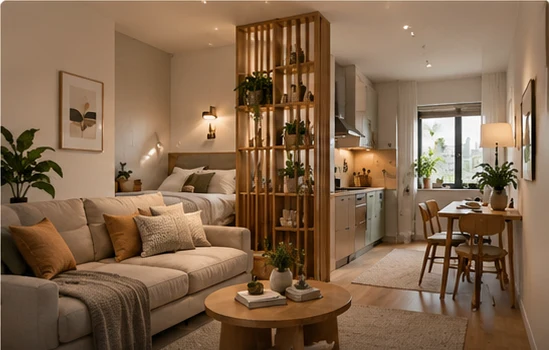
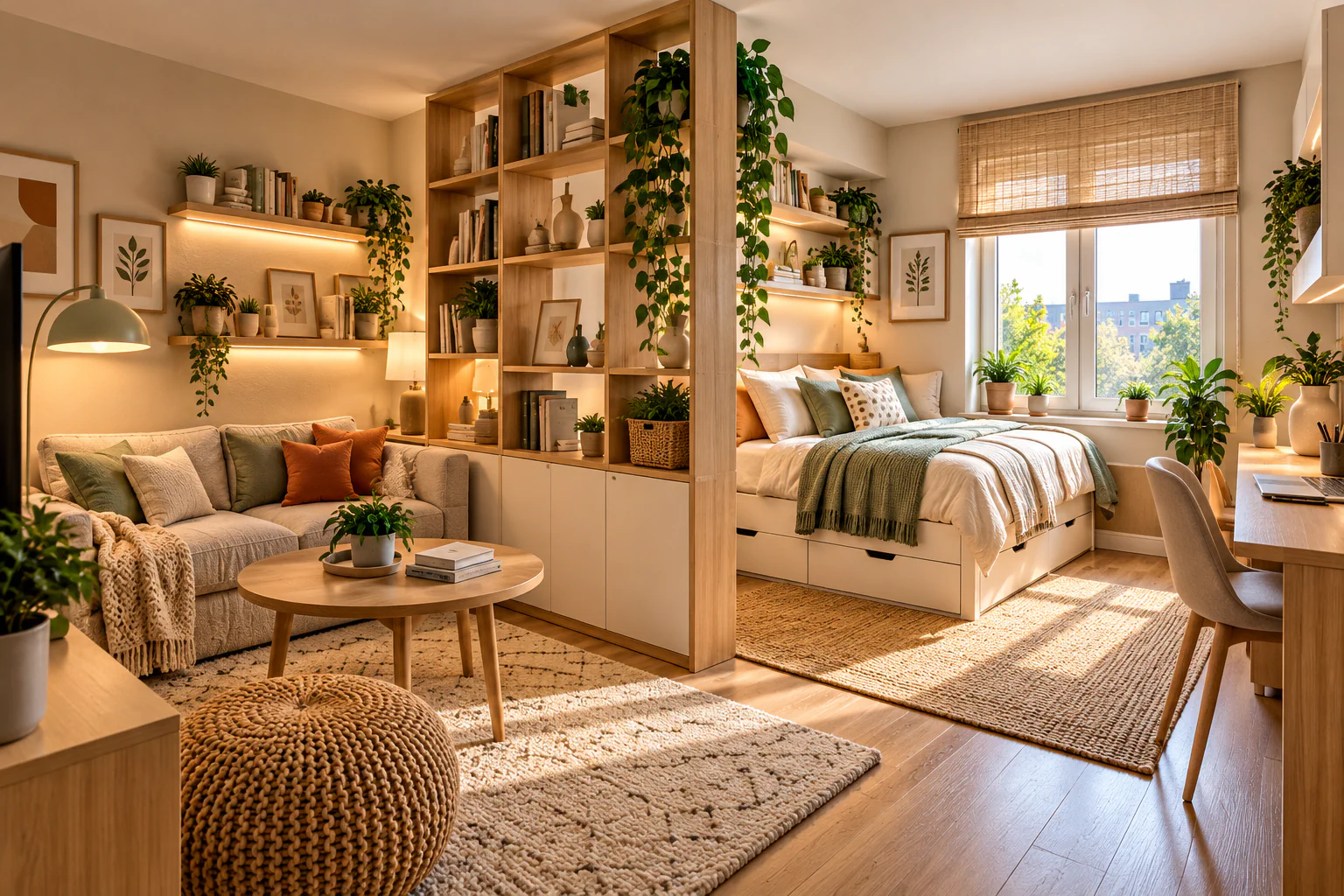
How to Divide a Studio Apartment Without Building Walls works best when the room is treated as a system rather than a collection of products. Start by measuring fixed points, then decide what the space must support every day. This keeps the result practical and prevents a clever-looking idea from creating a new obstacle. The most useful first move is to mark entrances, windows, heating, doors, and the route people use most. For a related product decision, see our AptNook buying guide.
1. Start with daily routes
Begin with the constraint that cannot move. Measure the usable width, the opening range of doors and drawers, and the space needed for a comfortable pass. Keep a small buffer around moving parts. A plan that works only when everything is perfectly placed will not survive a busy morning. Give frequently used items the easiest access, and reserve high or deep storage for things used less often.
AptNook Tip: Mark the proposed footprint with painter's tape for one full day. Walk the route, open every door, and notice where your hands or feet repeatedly collide with the plan.
When two functions share one footprint, separate them with time, height, or a lightweight boundary. Choose the smallest intervention that solves the actual problem: a shallow shelf can beat a deep cabinet, and a fold-down surface can beat a permanent one. Check the opened, loaded, cleaned, and stored versions of any item before buying. For a deeper comparison, continue with this AptNook commercial guide.
2. Use furniture as a boundary
Begin with the constraint that cannot move. Measure the usable width, the opening range of doors and drawers, and the space needed for a comfortable pass. Keep a small buffer around moving parts. A plan that works only when everything is perfectly placed will not survive a busy morning. Give frequently used items the easiest access, and reserve high or deep storage for things used less often.
AptNook Tip: Mark the proposed footprint with painter's tape for one full day. Walk the route, open every door, and notice where your hands or feet repeatedly collide with the plan.
When two functions share one footprint, separate them with time, height, or a lightweight boundary. Choose the smallest intervention that solves the actual problem: a shallow shelf can beat a deep cabinet, and a fold-down surface can beat a permanent one. Check the opened, loaded, cleaned, and stored versions of any item before buying.
3. Keep borrowed light moving
Begin with the constraint that cannot move. Measure the usable width, the opening range of doors and drawers, and the space needed for a comfortable pass. Keep a small buffer around moving parts. A plan that works only when everything is perfectly placed will not survive a busy morning. Give frequently used items the easiest access, and reserve high or deep storage for things used less often.
AptNook Tip: Mark the proposed footprint with painter's tape for one full day. Walk the route, open every door, and notice where your hands or feet repeatedly collide with the plan.
When two functions share one footprint, separate them with time, height, or a lightweight boundary. Choose the smallest intervention that solves the actual problem: a shallow shelf can beat a deep cabinet, and a fold-down surface can beat a permanent one. Check the opened, loaded, cleaned, and stored versions of any item before buying.
4. Create a visual bedroom edge
Begin with the constraint that cannot move. Measure the usable width, the opening range of doors and drawers, and the space needed for a comfortable pass. Keep a small buffer around moving parts. A plan that works only when everything is perfectly placed will not survive a busy morning. Give frequently used items the easiest access, and reserve high or deep storage for things used less often.
AptNook Tip: Mark the proposed footprint with painter's tape for one full day. Walk the route, open every door, and notice where your hands or feet repeatedly collide with the plan.
When two functions share one footprint, separate them with time, height, or a lightweight boundary. Choose the smallest intervention that solves the actual problem: a shallow shelf can beat a deep cabinet, and a fold-down surface can beat a permanent one. Check the opened, loaded, cleaned, and stored versions of any item before buying.
5. Give each zone one anchor
Begin with the constraint that cannot move. Measure the usable width, the opening range of doors and drawers, and the space needed for a comfortable pass. Keep a small buffer around moving parts. A plan that works only when everything is perfectly placed will not survive a busy morning. Give frequently used items the easiest access, and reserve high or deep storage for things used less often.
AptNook Tip: Mark the proposed footprint with painter's tape for one full day. Walk the route, open every door, and notice where your hands or feet repeatedly collide with the plan.
When two functions share one footprint, separate them with time, height, or a lightweight boundary. Choose the smallest intervention that solves the actual problem: a shallow shelf can beat a deep cabinet, and a fold-down surface can beat a permanent one. Check the opened, loaded, cleaned, and stored versions of any item before buying.
A simple decision check
Ask three questions before committing: Does this improve a real daily action? Can it be cleaned and reset without special effort? Will it still make sense if the routine changes? If the answer is no, reduce the idea until it becomes dependable. Good small-space design is not about fitting the maximum number of objects; it is about making important actions feel easy.
The AptNook takeaway
Measure first, protect movement, and let every object earn its footprint. Keep the floor visually continuous, hide background noise, and revisit the arrangement after a week of real life. For the next practical step, read this related AptNook article.

David
Head of Editorial — AptNook
David oversees AptNook's editorial workflow, coordinating research, writing, and quality reviews to help readers make informed decisions about space-saving furniture and small-room solutions.